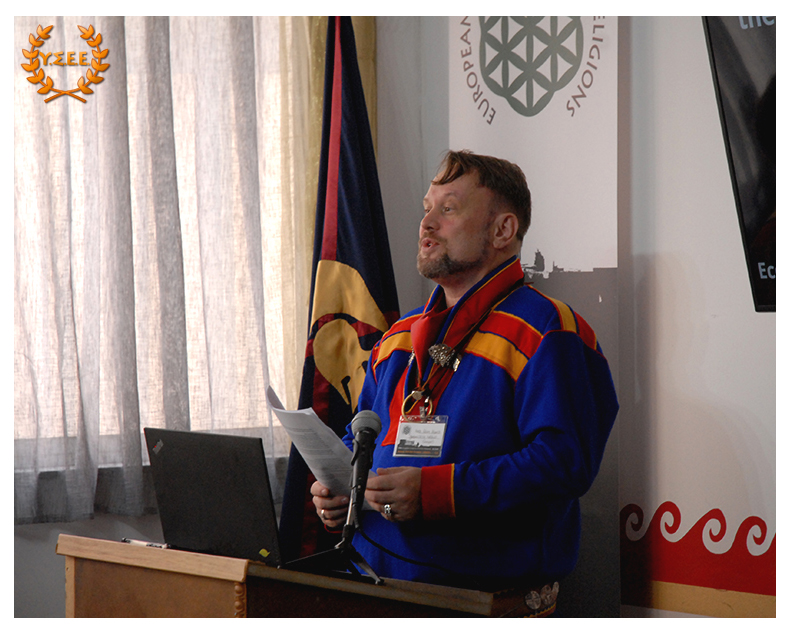
Speech of 2025/10/03 in Athens by Kyrre Gram Franck, founder of the Sjamanistisk Forbund (Norway)

"The Contribution of Ethnic Religions to the formation of European Identity"
 Ladies and gentlemen, esteemed colleagues,
It is an honor to speak before you today at the European Congress of Ethnic Religions. Our topic —
the contribution of ethnic religions to the formation of European identity — invites us to explore a
subject that is both deeply historical and urgently relevant. In doing so, we approach it with respect,
a commitment to inclusivity, rejecting any narratives rooted in supremacy or exclusion. Instead, we
focus on the foundational role that ethnic religious traditions have played—and continue to play—in
shaping the identities and cultures of Europe.
When we use the term ethnic religion in this context, it should never be understood as a white
supremacist expression, nor as something closed and restricted only to people of a parcular
ethnicity. The term refers to religious traditions rooted in specific cultures and landscapes, but their
practice and study are open to anyone who approaches them with respect, sincerity, and dedication,
regardless of background or origin. What matters is genuine commitment and willingness to learn,
not a person’s ethnicity.
My name is Kyrre Franck and I am a Sami, practising the old religion of Noiadevuohta also being the
founder of Shamanic associaon of Norway. I am not a scholar but a tradionalist. So I do not try to
hide the fact that I am pro Ethnic religions. I have also had the honor of serving at the board of Ecer
for the past two years.
European identity is not a singular or static essence. Rather, it is a pluralistic and evolving tapestry
woven from many threads: histories, languages, peoples, and beliefs. Central to this tapestry are the
ethnic religions indigenous to the continent—those spiritual systems rooted in specific peoples,
lands, and ancestral traditions. These religions have formed vital pillars of community and identity,
and remain integral to understanding the cultural and societal fabric of Europe.
Understanding European identity as pluralistic and evolving.
 From the outset, it is important to emphasize that European identity is not an exclusive concept
shaped by any single tradition or faith. It is pluralistic and layered, encompassing multiple heritages
and experiences. An inclusive European identity acknowledges the diverse religious and cultural
legacies contributed by ethnic religions across the continent.
From the outset, it is important to emphasize that European identity is not an exclusive concept
shaped by any single tradition or faith. It is pluralistic and layered, encompassing multiple heritages
and experiences. An inclusive European identity acknowledges the diverse religious and cultural
legacies contributed by ethnic religions across the continent.
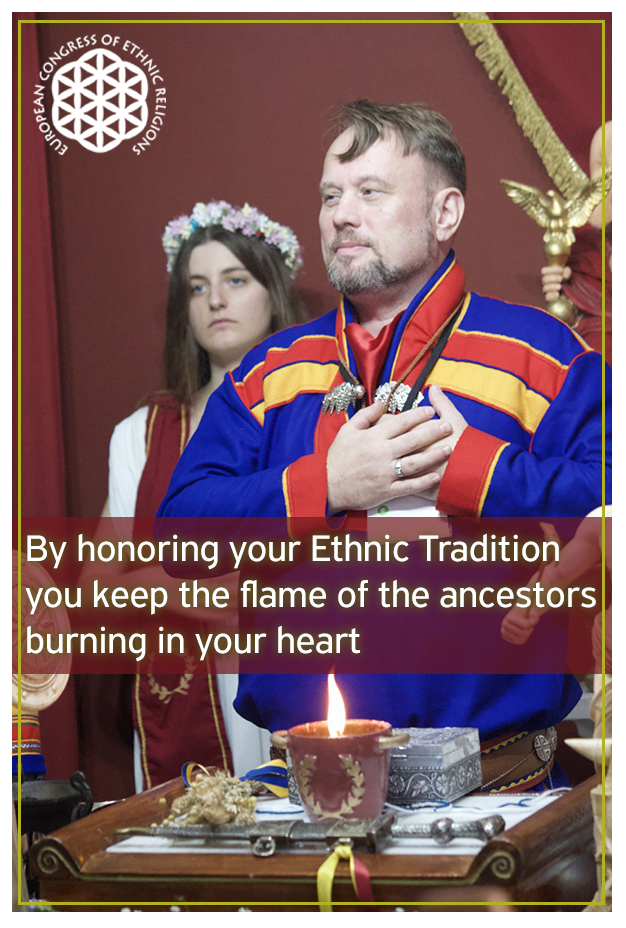
Ethnic religions offer perspectives that highlight connections to land, ancestry, and nature, which
have been central in shaping the ways communities understand themselves and their place in the
world. Europe’s complex history shows us that identity formation is a dynamic process shaped by
these deeply rooted traditions as well as external influences.
Ethnic religions as foundations of community and identity
Ethnic religious traditions provide more than spiritual belief systems; they serve as frameworks for
social cohesion, cultural continuity, and collective memory. Through rituals, symbols, and narratives,
they establish bonds within communities, nurturing senses of belonging and shared identity.
For many indigenous and regional peoples, including groups such as the Sámi, religious traditions are
inseparable from the land and community life. These spiritual systems encode knowledge of the
environment, ancestral histories, and ethical values, guiding relationships within and beyond the
community. They have historically supported the preservation of languages, art, and customary
laws—components fundamental to cultural survival.
Suppression and resilience of Ethnic religions
It is essential to acknowledge the difficult history ethnic religions have faced in Europe. Christianity, as
it expanded across the continent, frequently sought the suppression and eradication of indigenous
beliefs. This process often involved coercive conversion efforts, assimilationist policies, and the
marginalization or destruction of original religious practices.
These experiences have left scars but have not extinguished the spiritual heritage of ethnic religions.
Instead, many communities have demonstrated remarkable resilience, maintaining or reviving their
traditions despite centuries of pressure. Today we witness vibrant movements aimed at reclaiming
indigenous spiritual practices and reasserting their place within the broader societal and cultural
landscapes of Europe.
Religious traditions as societal and identity-building factors
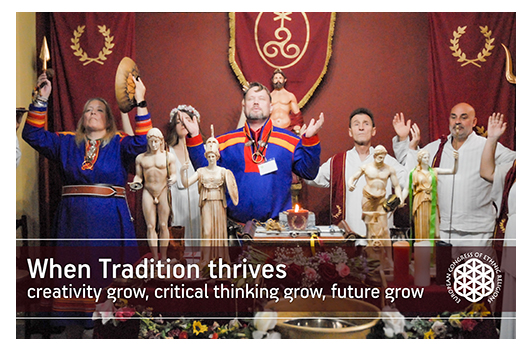 Religious traditions—whether ethnic, indigenous, or otherwise—play a fundamental role as societal
glue. They provide rituals and narratives that situate individuals within a shared past and collective
future, fostering solidarity and cultural continuity.
Religious traditions—whether ethnic, indigenous, or otherwise—play a fundamental role as societal
glue. They provide rituals and narratives that situate individuals within a shared past and collective
future, fostering solidarity and cultural continuity.
In Europe, ethnic religions contribute to shaping identity on mulple levels—local, regional, and
continental. They anchor people to particular territories and histories, enabling the preservation of
unique cultural forms that enrich the connent’s diversity. This dynamic counters homogenizing
forces and offers spaces where multiple identities coexist, interact, and flourish.
Sámi Indigenous Religion (Northern Europe): The Sámi people’s shamanisc and animistic traditions
are deeply connected to the Arctic landscape, reindeer herding, and ancestral heritage. These
practices are vital for Sámi cultural identity and community cohesion. Despite historical suppression
during Christianization and nation-building in Scandinavia, Sámi spirituality remains a living force,
now a central part of our movement for cultural survival and recognition, anchoring identity to land
and indigenous rights.
Baltic pagan traditions.These groups maintain cultural identities intertwined with pre-Christian pagan
beliefs focused on nature worship and ancestral spirits. Though Christianity and other religions
became dominant, there has been a revival and celebration of these ancient traditions through
festivals, folklore, and ritual, reinforcing regional distinctiveness and ethnic pride within the broader
European mosaic.
Celtic religious heritage. Ancient Celtic polytheistic beliefs shaped community life and social
structures in regions like Ireland, Scotland, Wales, and Brittany. Today, modern Celtic identiyy often
incorporates elements of Celtic spirituality and cultural revival, including language preservation and
artistic expression, connecting regional identity to a shared continental heritage of indigenous
European traditions.
Ethnic religions in modern European identity
In the modern European context, ethnic religions gain recognition as valuable components of cultural
heritage under frameworks established by the European Union and the United Nations. Instruments
such as the EU Charter of Fundamental Rights and the UN Universal Declaration of Human Rights
uphold the rights to freedom of thought, conscience, and religion while protecting cultural and
linguistic diversity.
These legal and ethical frameworks affirm that preserving ethnic religions is essential not only for the
cultural survival of specific communities but also for the broader project of building an inclusive
European identity. Respecting and supporting the diversity of religious traditions strengthens the
social fabric, fostering mutual understanding and coexistence.
The Sámi perspective on Ethnic religion and identity
To illustrate these principles, I offer the example of my own people, the Sámi, the indigenous people
of Northern Europe. Our spiritual traditions embody the intimate bond between identity, land, and
religion. Sámi indigenous religion, rooted in animism and shamanic practices, reflects a profound
relationship with nature and ancestral heritage.
The history of the Sámi includes periods of suppression, particularly during Christian missionary
expansion and nation-state building in Norway and surrounding countries. Yet, Sámi activism today
champions the revitalization and preservation of their spiritual heritage as a cornerstone of their
cultural identity and rights.
The Sámi experience exemplifies how ethnic religions are not relics of the past but living traditions
that continue to shape identity, social cohesion, and cultural resilience in the face of modern
challenges.
European legal and ethical frameworks supporting religious and cultural diversity
Europe benefits from robust legal frameworks that protect religious freedom and cultural rights. The
EU Charter of Fundamental Rights recognizes the right to freedom of religion and belief, as well as
protection against discrimination on grounds including ethnic origin and religion. Similarly, the United
Nations emphasizes cultural rights and the importance of protecting indigenous peoples' heritage.
These frameworks entail an ethical commitment to support minority and ethnic religions as
indispensable parts of Europe's pluralisc identity. Ensuring their protection and promotion is
consistent with democratic values and promotes peaceful coexistence.
Positive contributions and future outlook
Ethnic religions contribute positively to Europe’s cultural mosaic. They preserve ancient wisdom, offer
unique worldviews, and enrich spiritual diversity. Their rituals and ethics often emphasize respect for
nature, community responsibility, and continuity—values increasingly relevant in contemporary
society.
Looking forward, fostering pluralism and intercultural dialogue offers the best path toward a resilient,
inclusive European identity. Recognizing and valuing ethnic religions within the connent safeguards
cultural richness and strengthens social cohesion.
Challenges for Ethnic religions in the formation of a European identity
Ethnic religions play a vital role in shaping European identity by connecting people to their ancestral
lands, histories, and cultural practices. However, they face several significant problems and obstacles
in their contribution to the formation of a cohesive European identity.
One major challenge is the historical legacy of suppression and marginalization, particularly due to
Christianization and nation-state policies that sought to eradicate or assimilate indigenous and ethnic
religious traditions. This history has led to the loss of rituals, languages, and knowledge essential to
these religions, making revival efforts difficult.
Additionally, ethnic religions often confront contemporary societal misconceptions, including
misunderstandings that label them as archaic, nostalgic, or even politically contentious. This can
result in limited public recognition and support, complicating efforts to preserve and integrate these
traditions within broader European cultural narratives.
Furthermore, legal and instituonal frameworks, while increasingly protective, sometimes fall short in
fully acknowledging the unique needs of ethnic religions, creating obstacles in the exercise of
religious rights, cultural education, and access to sacred lands.
Finally, globalization and homogenizing cultural forces pose ongoing threats to the distincveness of
ethnic religions, challenging their maintenance amid rapid social and economic changes.
Despite these obstacles, ethnic religions continue to demonstrate resilience and contribute
profoundly to a pluralisc and inclusive European identity, emphasizing the need for sustained
recognition, protection, and dialogue.
Embracing diversity for a cohesive European identity
In closing, ethnic religions have played—and continue to play—a foundational role in the formation
and evolution of European identity. Their contributions as societal and identity-building forces must
be acknowledged and respected. This recognition aligns with human rights frameworks commitied to
dignity, freedom, and cultural diversity.
European identity is strongest when it embraces its pluralisc heritage, recognizing the enduring
significance of indigenous and ethnic religious traditions. Only through a shared commitment to
respect, inclusion, and dialogue can Europe continue to be a living tapestry of many voices, histories,
and cultures.
Sources
1. Research project on ethnic and religious diversity in European nation-building — explores
how ethnicity and religion shape national identities in countries including Norway:
"Implications of Ethnic and Religious Diversity for National Identiyy" (PRIO, 2013-
2017)
2. Scholarly report examining the creation of EU identity with attention to ethnic and civic
nationalism:
"Civic and Ethnic Nationalism in European Union Identity Creation" (University of
Oslo, 2020)
3. Article on ethnic boundary-making and religious transnationalism among youths in Norway,
providing insights into contemporary idenitty negotiations:
"Dimensions of Ethnic Boundary-Making: Experiences of Young…" (2022)
4. Paper on ethnicity, religion, and intercultural dialogue in European border regions focusing on
cultural identity and religious diversity:
"Ethnicity, Religion and Intercultural Dialogue in the European Border Space"
5. Overview of Sámi and indigenous studies by Nordic researchers covering indigenous
spirituality, language revitalizaon, and cultural survival:
Sámi and indigenous people research profiles (Nord University, 2025)
6. Research article on the romantic indigenizing of new religious movements in contemporary
Europe addressing indigenous spiritual revival:
"Romantic Indigenizing of New Religions in Contemporary Europe" (International
Journal for the Study of New Religions, 2019)
7. Academic analysis of European identity between religiousness and secularity, discussing the
complex role of religiosity in Europe:
"European Identity between Religiousness and Secularity" (2020)
8. Historical study on the suppression and eradication of non-Christian religions in medieval
Western Europe:
"Not So Innocent: Clerics, Monarchs, and the Ethnoreligious..." (2024)
9. Article describing the Sámi as Europe’s only recognized Indigenous group and their spiritual
traditions, including challenges and revitalization:
"How Europe's only Indigenous group is inspiring a greener Christianity" (2024)
10. Literature review of national and European identity research with empirical findings on
diverse identity patterns:
"Forms of National and European Identity: A Research Note" (2024)